


OCD Therapy in Sacramento
Beyond Exposure: Treating the Root of OCD

If you live with relentless loops of worry, alarming thoughts, or the constant urge to check, balance, or neutralize things, you know how exhausting it can be. You might feel like you’re constantly fighting your own mind just to feel safe for a brief moment.
If you have thought about seeking treatment for Obsessive Compulsive Disorder (OCD), I want you to know there is a way forward that won't feel like a constant battle. Effective OCD therapy goes beyond just suppressing OCD symptoms through exposure alone. Beyond Exposure helps you care for the parts of yourself that created those protective behaviors in the first place.
If you feel isolated in this struggle, please know you are far from alone. The reality is that those alarming and unwanted thoughts in your head are a universal human experience. Clinical research shows that up to 94% of people deal with the exact same types of intrusive thoughts that fuel OCD cycles. Experiencing these relentless loops doesn't mean you are broken, flawed, or unsafe; it simply means your brain’s protective alarm system is working overtime and assigning extra urgency to those thoughts that most minds are able to pass by. Millions of people across the globe live with OCD, and like you, many are looking for lasting OCD treatment to find relief from this internal fight.
Maybe you have actively been seeking therapy for intrusive thoughts, obsessive thoughts, or other compulsive behaviors. Or, perhaps you aren't even sure what to call it yet—you just know that you can't seem to stop these continuous loops of mental rumination. Perhaps you can't shake off a lingering, uncomfortable feeling in your body or you might find yourself showering repeatedly just to feel clean enough, vacuuming the carpet repeatedly to make it look "right," or counting your steps to ward off anxiety. Whatever way these patterns show up for you, you don't have to navigate them alone. Through dedicated OCD therapy, we can work together to bring a true, long-lasting sense of safety to your nervous system.
Looking Beneath the Surface
While Exposure and Response Prevention (ERP) is the standard first-line obsessive compulsive disorder treatment, behavioral mechanics only tell half the story.
ERP works by exposing you to fear triggers while resisting compulsive rituals, helping build anxiety tolerance and break the habit loop. But while it can quiet overt symptoms, focusing solely on behavioral exercises can leave your deeper emotional needs unmet. Sitting with constant triggers without addressing why those alarms exist often leads to exhaustion. Over time, a weary mind simply creates new compulsions to cope.
Beyond the mechanics of OCD is a human being searching for genuine safety and connection. Many OCD loops are rooted in earlier life experiences and unmet emotional needs.
Healing requires going deeper than basic symptom management to offer your younger self the quiet, dependable presence they needed all along. When engaging in holistic ocd therapy, you learn to listen to those unmet needs and reparent those vulnerable parts, allowing the compulsion to naturally lose its grip because true relief has already arrived from within.
Beyond Exposure and The PAVEN Method: Healing the Root of OCD
To help address the root drivers of OCD, I use an integrative approach I developed called PAVEN. This method combines guided visualization and inner-child work to offer relief to the vulnerable parts of you that fuel obsessive tendencies.
Rather than treating your mind's alarms as an enemy to suppress, this gentle, somatic framework guides you inward to connect with the parts of yourself that drive compulsive loops. By combining emotional awareness, somatic tracking, and inner-child reparenting work, PAVEN addresses the unmet needs at the core of your patterns while serving as a compassionate therapy for intrusive thoughts and physical anxiety. Through this process, your nervous system can finally cultivate a genuine sense of safety.

A Few Facts You Might Not Know About OCD Therapy
Knowing a thought is irrational doesn't make the anxiety go away. A common misconception is that people who experience OCD don't realize their fears are often illogical. In truth, most adults seeking OCD treatment are fully aware that their obsessive fears, intrusive thoughts, and rituals are illogical, but the brain's false "alarm system" fires so strongly that the urgent need to seek safety overrides logic.
When you have OCD, your brain’s alarm system goes off, but that "alarm" doesn't always sound like a voice in your head. An intrusion can also look or feel like:
A sudden mental picture: A distressing image or movie flash playing in your mind.
A strange body sensation: A sudden feeling of tightness, an involuntary twitch, or a strange physical reaction.
A scary urge: Feeling like you might suddenly lose control or do something out of character, even though you have no desire to.
No matter how the experience of OCD shows up—whether it be a thought, a picture, or a physical feeling—it isn't a reflection of what you want or who you are. It’s simply a false alarm that your body's survival system triggered.
Compulsions can happen entirely inside your head. Many people assume compulsions are always visible physical actions, like checking a lock or washing hands. In reality, mental compulsions such as silently repeating phrases, analyzing past memories, counting, or seeking internal reassurance are just as common and can be just as exhausting. Experiencing holistic OCD therapy helps you address both the physical and mental compulsions at their root.
Beyond Exposure: The Paven Method
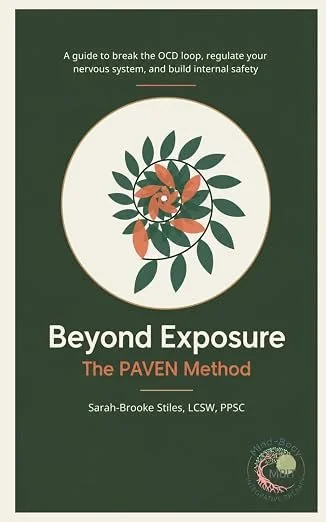
Beyond the behavioral mechanics of OCD lies a human being who deeply needs connection, understanding, and true safety. Many OCD triggers are rooted in early childhood experiences where fundamental emotional needs went unmet, whether that meant feeling misunderstood, unsupported, or unsafe in an unpredictable environment.
When we only focus on stopping compulsions, we are often treating the symptom while ignoring the person living inside it. Effective, lasting healing means moving far beyond surface-level symptom management. It requires us to turn inward and address the core emotional safety that your system has been searching for all along. When you learn how to cultivate that safety within yourself, the urge to manage your world through relentless checking and overthinking naturally begins to soften.
Recent Posts





Start your path to feeling safe
If OCD or intrusive thoughts are holding you back from thriving and living your best life, therapy can help you manage and overcome your fears. I invite you to contact me to find out more about how I can support and guide you.